


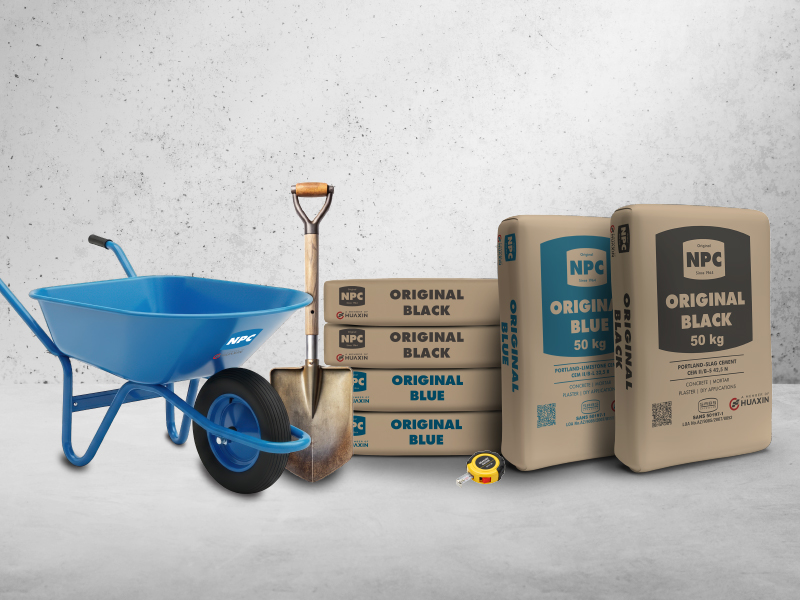
What Is Cement?
Cement is the essential binding material that forms the foundation of construction. When combined with water, sand and stone, it creates concrete – the structural backbone of homes, businesses, and infrastructure.
For generations, our cement has helped shape skylines, communities, and progress across KwaZulu-Natal. Manufactured from our own high-quality limestone resources and produced under strict quality controls, it delivers the consistent strength and reliability.
Because cement is more than a material; it is the foundation of lasting structures and stronger communities.
What Are the Uses & Benefits of Cement?
Cement has various applications because it’s versatile, easy to shape, durable and strong – ideal for construction.
These applications vary from the production of concrete and mortar to screeds, plaster and grouts. Cement also offers you specialised uses such as cement stabilisation, hydraulic cement and for DIY, artistic and decorative purposes – e.g. sculpting.
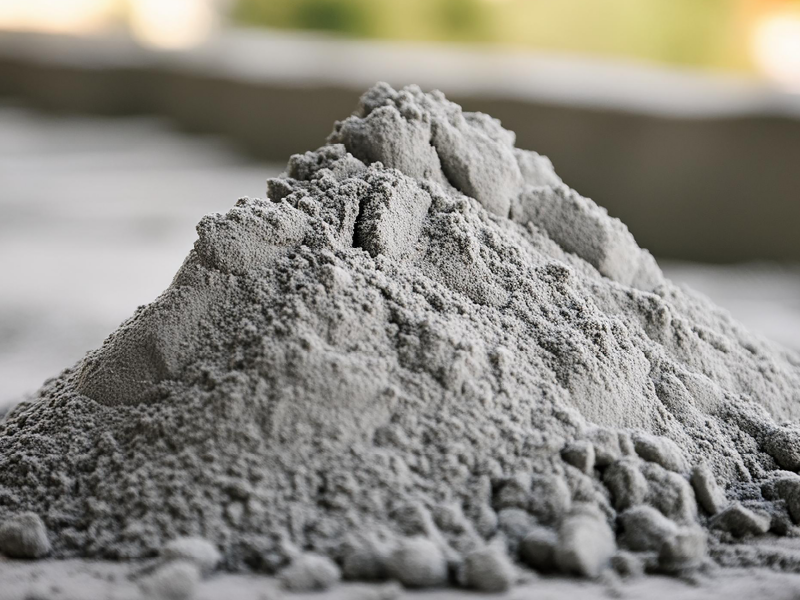
NPC Plants
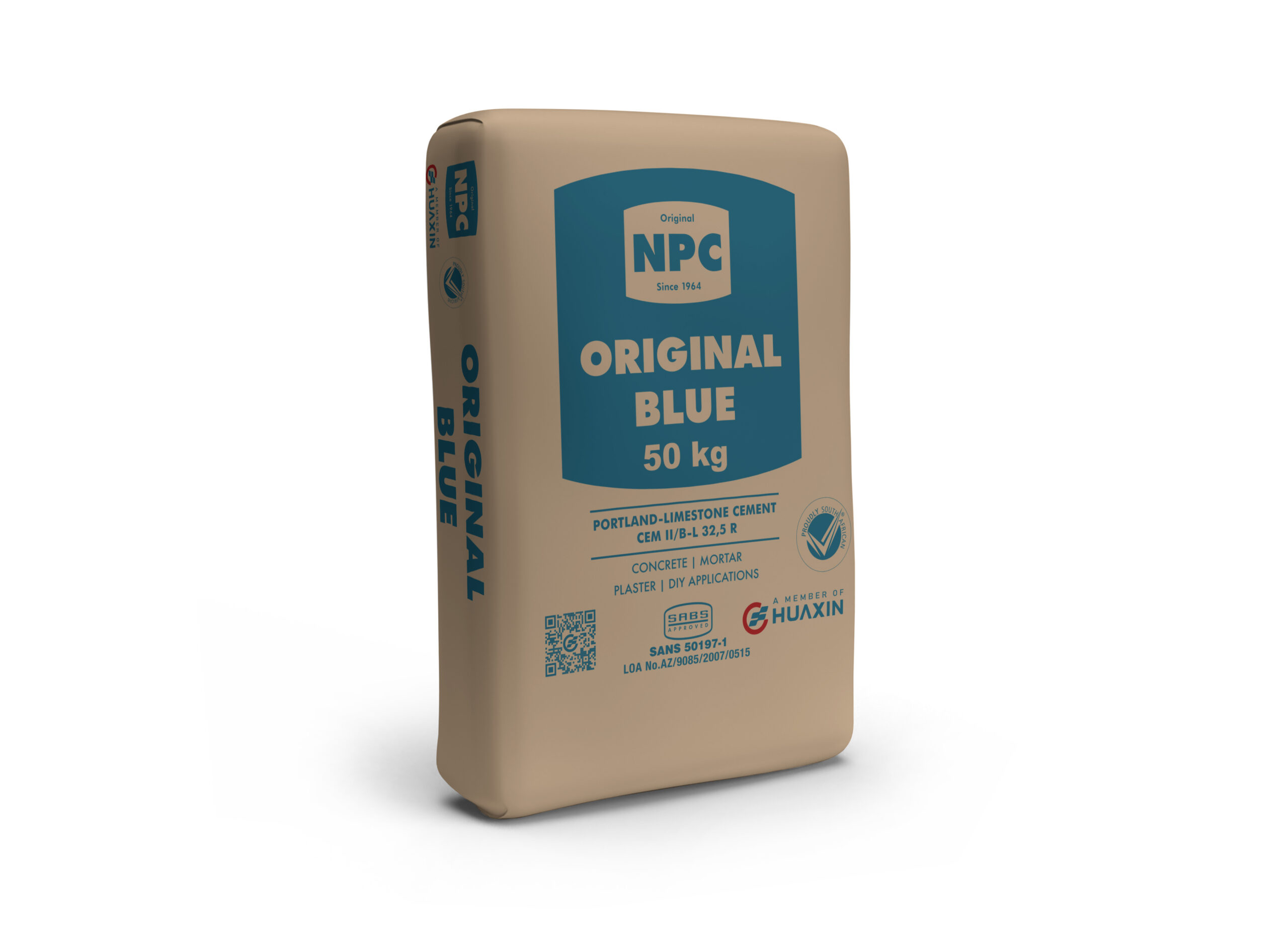
NPC Durban Plant
Durban Portland–Limestone Cement
(SANS 50197-1 | CEM II/B-L 32,5R)
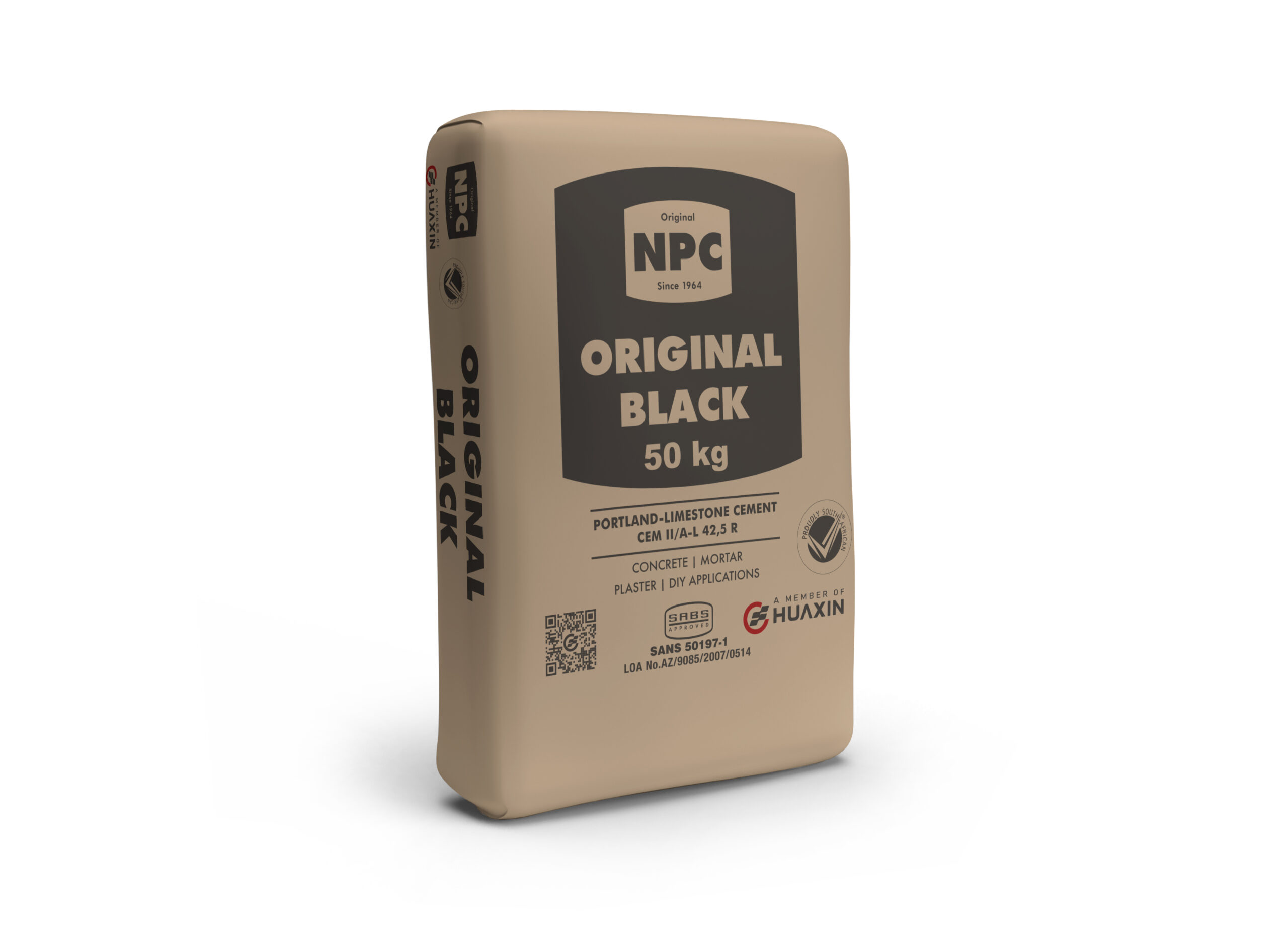
Durban Portland–Limestone Cement
(SANS 50197-1 | CEM II/A-L 42,5R)
NPC Newcastle Plant
Newcastle Portland-Fly Ash Cement
(SSANS 50197-1 | CEM II/A-V 42,5N)
Newcastle Portland-Fly Ash Cement
(SANS 50197-1 | CEM II/B-V 32,5N)
Simuma Plant
Simuma Portland–Limestone Cement
(SANS 50197-1 | CEM II/B-L 32,5R)
Simuma Portland–Limestone Cement
(SANS 50197-1 | CEM II/A-L 42,5R)
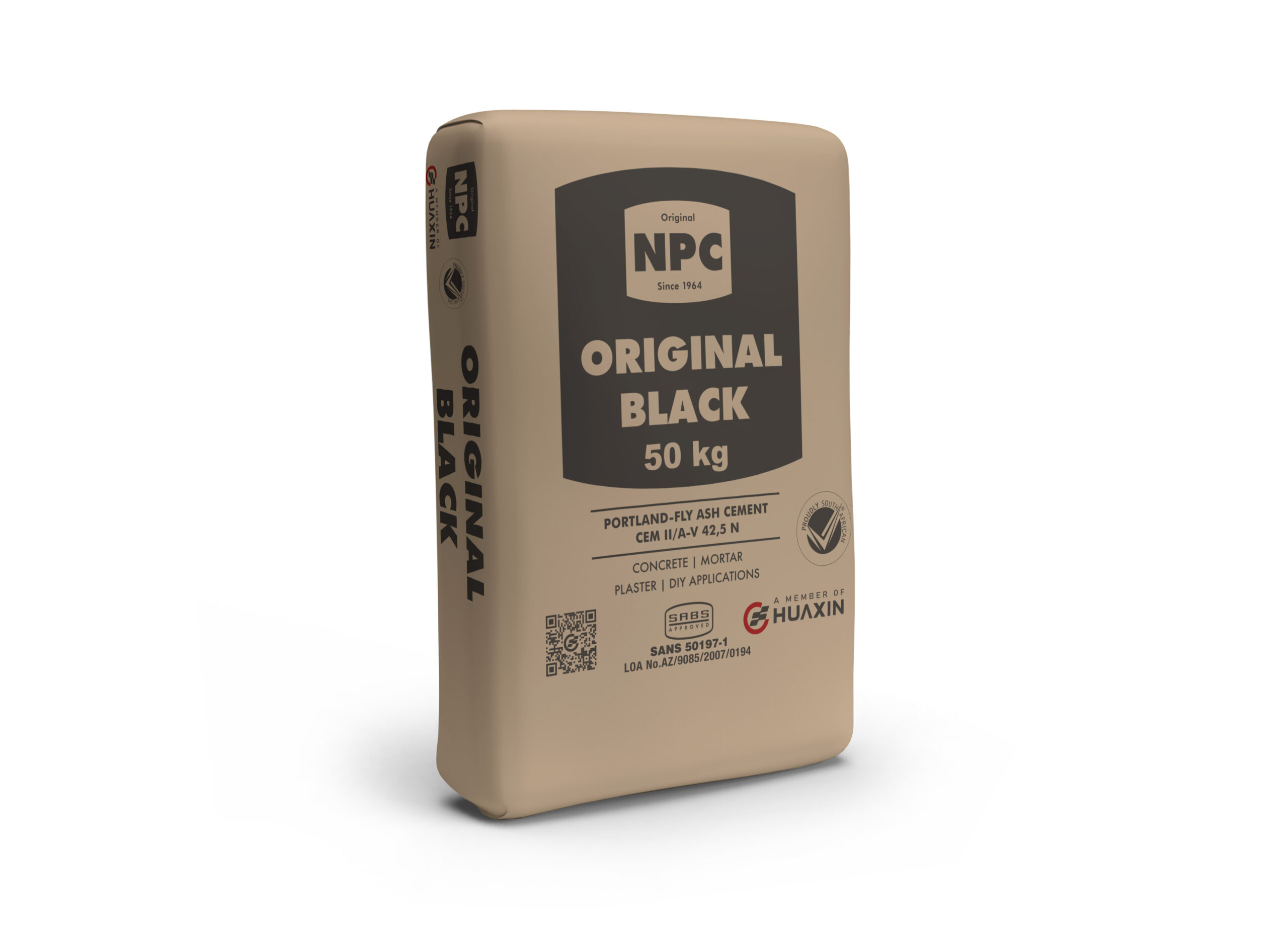
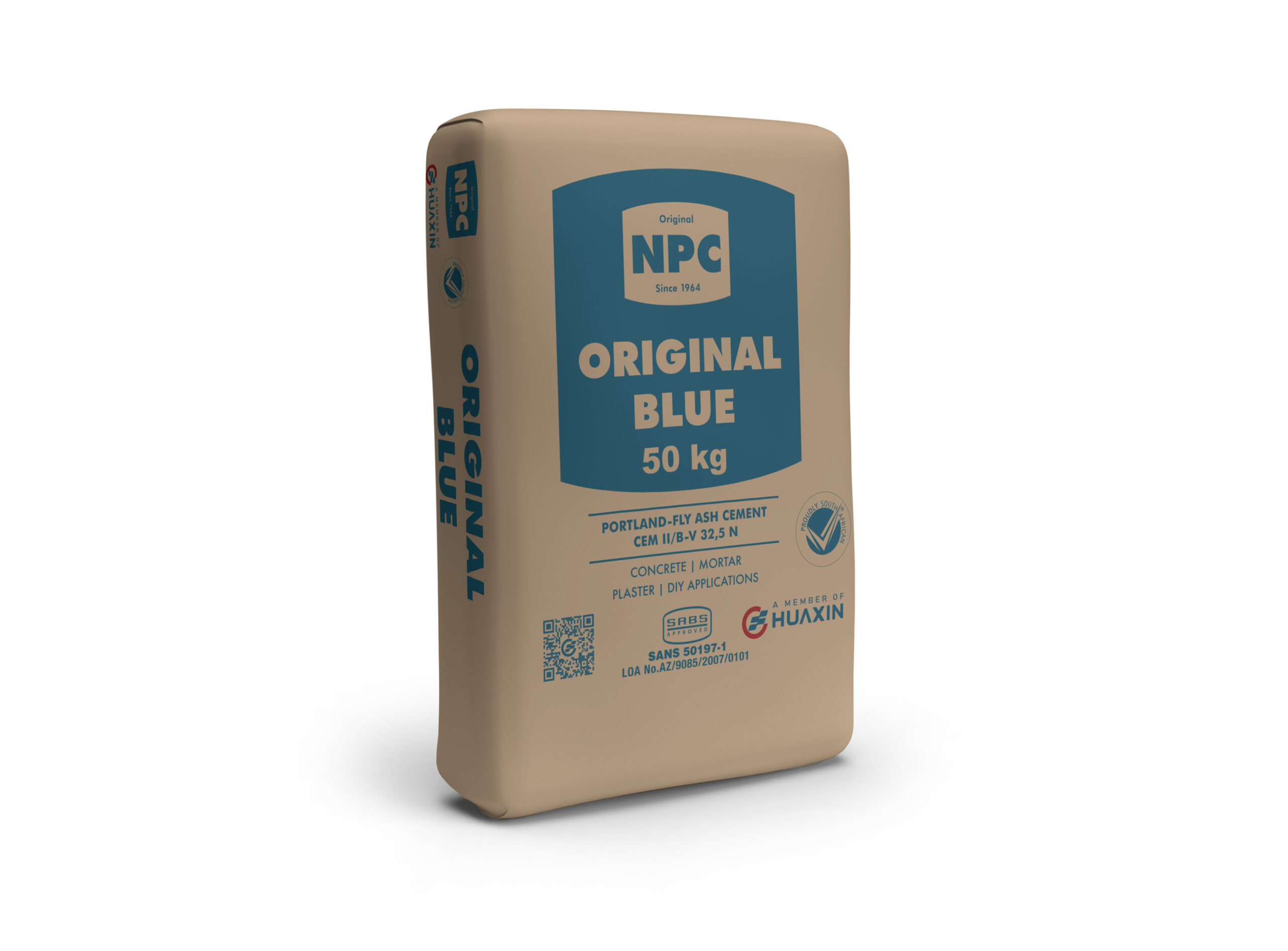


Mechanical and Physical Requirements given as a single value
| Strength Class | Compressive Strength (MPa) | Initial Setting Time (min) | Soundness (mm) | |||
|---|---|---|---|---|---|---|
| Early Strength | Standard Strength | |||||
| 2 Days | 7 Days | 28 Days Min | 28 Days Max | |||
| 32,5 La | - | ≥ 12,0 | ≥ 32,5 ≤ 52,5 | ≥ 75 | ≤ 10 | |
| 32,5 N | - | ≥ 16,0 | ≥ 32,5 ≤ 52,5 | ≥ 75 | ||
| 32,5 R | ≥ 10,0 | - | ≥ 32,5 ≤ 52,5 | ≥ 75 | ||
| 42,5 La | - | ≥ 16,0 | ≥ 42,5 ≤ 62,5 | ≥ 60 | ||
| 42,5 N | ≥ 10,0 | - | ≥ 42,5 ≤ 62,5 | ≥ 60 | ||
| 42,5 R | ≥ 20,0 | - | ≥ 42,5 ≤ 62,5 | ≥ 60 | ||
| 52,5 La | ≥ 10,0 | - | ≥ 52,5 | ≥ 45 | ||
| 52,5 N | ≥ 20,0 | ≥ 52,5 | ≥ 45 | |||
| 52,5 R | ≥ 30,0 | - | ≥ 52,5 | ≥ 45 | ||
| a Strength class only defined for CEM III cements. | ||||||
The 27 Products in the Family of Common Cements
| Main Types | Notation of the 27 products (types of common cement) |
Composition (percentage by mass) | Minor Additional Constituents |
||||||||||
|---|---|---|---|---|---|---|---|---|---|---|---|---|---|
| Main Constituents | |||||||||||||
| Clinker K |
Blast- furnace slag S |
Silica fume D |
Pozzolana | Fly Ash | Burnt shale T |
Limestone | |||||||
| Natural P |
Natural Calcined Q |
Siliceous V |
Calcareous W |
L | LL | ||||||||
| CEM I | Portland cement | CEM I | 95–100 | – | – | – | – | – | – | – | – | – | 0–5 |
| CEM II | Portland-slag cement | CEM II/A-S | 80–94 | 6–20 | – | – | – | – | – | – | – | – | 0–5 |
| Portland-slag cement | CEM II/B-S | 65–79 | 21–35 | – | – | – | – | – | – | – | – | 0–5 | |
| Portland-silica fume cement | CEM II/A-D | 90–94 | – | 6–10 | – | – | – | – | – | – | – | 0–5 | |
| Portland-pozzolana cement | CEM II/A-P | 80–94 | – | – | 6–20 | – | – | – | – | – | – | 0–5 | |
| Portland-pozzolana cement | CEM II/B-P | 65–79 | – | – | 21–35 | – | – | – | – | – | – | 0–5 | |
| Portland-pozzolana cement | CEM II/A-Q | 80–94 | – | – | – | 6–20 | – | – | – | – | – | 0–5 | |
| Portland-pozzolana cement | CEM II/B-Q | 65–79 | – | – | – | 21–35 | – | – | – | – | – | 0–5 | |
| Portland-fly ash cement | CEM II/A-V | 80–94 | – | – | – | – | 6–20 | – | – | – | – | 0–5 | |
| Portland-fly ash cement | CEM II/B-V | 65–79 | – | – | – | – | 21–35 | – | – | – | – | 0–5 | |
| Portland-fly ash cement | CEM II/A-W | 80–94 | – | – | – | – | – | 6–20 | – | – | – | 0–5 | |
| Portland-fly ash cement | CEM II/B-W | 65–79 | – | – | – | – | – | 21–35 | – | – | – | 0–5 | |
| Portland-burnt shale cement | CEM II/A-T | 80–94 | – | – | – | – | – | – | 6–20 | – | – | 0–5 | |
| Portland-burnt shale cement | CEM II/B-T | 65–79 | – | – | – | – | – | – | 21–35 | – | – | 0–5 | |
| Portland-limestone cement | CEM II/A-L | 80–94 | – | – | – | – | – | – | – | 6–20 | – | 0–5 | |
| Portland-limestone cement | CEM II/B-L | 65–79 | – | – | – | – | – | – | – | 21–35 | – | 0–5 | |
| Portland-limestone cement | CEM II/A-LL | 80–94 | – | – | – | – | – | – | – | – | 6–20 | 0–5 | |
| Portland-limestone cement | CEM II/B-LL | 65–79 | – | – | – | – | – | – | – | – | 21–35 | 0–5 | |
| Portland-composite cement | CEM II/A-M | 80–88 | 12–20 | 0–5 | |||||||||
| Portland-composite cement | CEM II/B-M | 65–79 | 21–35 | 0–5 | |||||||||
| CEM III | Blast furnace cement | CEM III/A | 35–64 | 36–65 | – | – | – | – | – | – | – | – | 0–5 |
| Blast furnace cement | CEM III/B | 20–34 | 66–80 | – | – | – | – | – | – | – | – | 0–5 | |
| Blast furnace cement | CEM III/C | 5–19 | 81–95 | – | – | – | – | – | – | – | – | 0–5 | |
| CEM IV | Pozzolanic cement | CEM IV/B | 45-64 | - | 11–35 | – | – | – | – | 0–5 | Pozzolanic cement | CEM IV/B | 45-64 | - | 36–55 | – | – | – | – | 0–5 |
| CEM V | Composite cement | CEM V/B | 40-64 | 18-30 | – | 18-30 | – | – | – | – | – | 0–5 | Composite cement | CEM V/B | 20–38 | 31-40 | – | 31–49 | – | – | – | – | – | 0–5 |
a The values in the table refer to the sum of the main and minor additional constituents.
b The proportion of silica fume is limited to 10%.
c In Portland-composite cements and pozzolanic cements, main constituents other than clinker shall be declared.
Brick-Laying
Brick bond patterns
- Mortar consistency
- Brick laying sequence
- Joint finishing
Products required
- Cement
- Building sand
- Clean water
- Bricks
- Trowel
- Spirit level
- String line
Mortar Mix Ratio
* 1 wheelbarrow of cement = 2 x 50kg pockets of cement
| Ratio | Explanation |
|---|---|
| 1:4 (Cement:Building Sand) Class 1 | 1:4 means 2 pockets of cement : 4 wheelbarrows of sand |
| 1:6 (Cement:Building Sand) Class 2 | 1:6 means 2 pockets of cement : 6 wheelbarrows of sand |
| Small batches / stronger applications | Reduce the sand by 0.5 parts |
Process
- Prepare solid foundation
- Mix mortar to firm, workable mix
- Lay mortar bed
- Place brick & tap into position
- Check level & alignment
- Finish joints while mortar is green
- Cure lightly for 2-3 days
Tip
Keep mortar joints consistent (+-10 mm)
Plastering
Imagery
- Wall preparation (before / after)
- Mixing plaster
- Applying first coat
- Final smooth finish
Products required
- Cement (General Purpose / Masonry)
- Clean plaster sand
- Clean water
- Bucket or mixer
- Trowel & hawk
- Straight edge | spirit level
Plaster Mix Ratio
* 1 wheelbarrow of cement = 2 x 50kg pockets of cement
| Ratio | Explanation |
|---|---|
| 1:5 (Cement : Plaster Sand) - External | 1:5 means 2 pockets of cement : 5 wheelbarrows of sand |
| 1:6 (Cement : Plaster Sand) - Internal | 1:6 means 2 pockets of cement : 6 wheelbarrows of sand |
| Add water slowly until workable | Do not make it runny |
Process
- Clean wall surface (remove dust & oil)
- Lightly wet the wall (do not soak)
- Mix plaster to creamy consistency
- Apply first coat evenly
- Level with a straight edge
- Final smooth with trowel finish
- Cure by lightly misting for 2-3 days
Common Mistakes
- Too much water
- Plastering dry walls
- No curing
Constructing a Braai Area
Imagery
- Foundation slab
- Brick structure
- Firebox area
- Finished braai
Products required
- Cement
- Coarse & fine aggregates
- Building sand
- Fire bricks (for firebox)
- Reinforcement mesh
- Steel Lintels
Mix Ratios
* 1 wheelbarrow of cement = 2 x 50kg pockets of cement
| Application | Ratio |
|---|---|
| Concrete Slab | 1:2:3 (Cement:Sand:Stone) |
| Brick Mortar | 1:4 (Cement : Sand) |
Process
- Prepare ground & cast slab
- Cure slab for minimum 7 days
- Lay bricks for structure
- Install fire bricks in firebox
- Build chimney
- Cure & protect before first fire
Important
Do NOT use normal mortar inside firebox